Moving to Spain to join your European partner or family member is an exciting milestone, but dealing with immigration paperwork can often dampen the excitement. If you hold a non-EU passport but are closely related to a citizen of the European Union, the European Economic Area (EEA), or Switzerland who resides in Spain, you do not need a standard visa. Your pathway to living locally is the community card.
Let’s break down exactly what this document is, who qualifies, and how you can secure your residency without getting lost in bureaucratic red tape.
What is the community card?
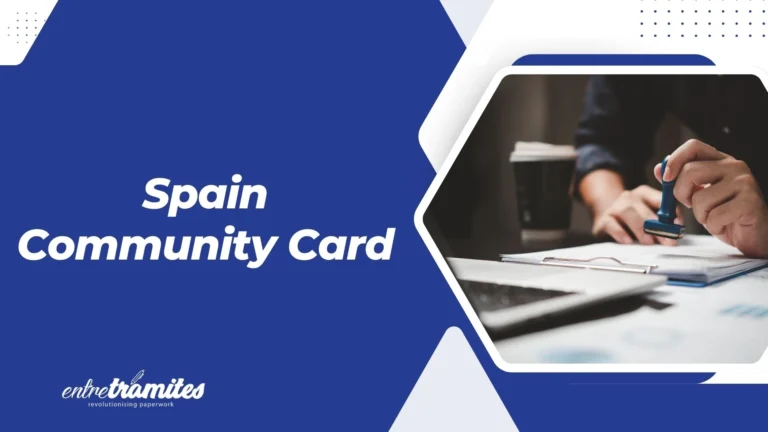
The community card, officially known in Spanish as the Tarjeta de Residencia de Familiar de Ciudadano de la Unión (often just called the Tarjeta Comunitaria), is a special residence permit. It is specifically designed for non-EU citizens who are joining an EU family member residing in Spain.
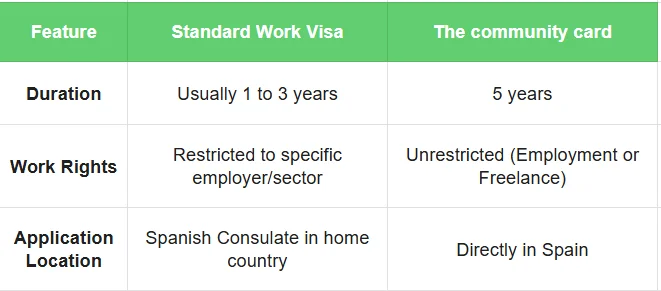
Unlike standard work permits or the Digital Nomad Visa, this residency is directly tied to your relationship with the European citizen. Once approved, it grants you the right to live and work in Spain under the exact same conditions as any European local. You can work as an employee (por cuenta ajena) or register as a self-employed freelancer (Autónomo).
Who is Eligible for This Residency?
Not every relative qualifies for this permit. The Spanish authorities have strict definitions regarding which family members can apply. To be eligible in 2026, you must fall into one of the following categories:
Spouses and Registered Partners
If you are legally married to an EU citizen, you qualify. If you are not married but have formally registered your relationship as a civil partnership (Pareja de Hecho), you also qualify. Unregistered partners can sometimes apply if they can prove a minimum of one year of continuous cohabitation or if they have children together, but this route requires significantly more evidence.
Dependent Children
Direct descendants of the EU citizen (or of their spouse/registered partner) who are under 21 years old are automatically eligible. If the child is over 21, you must prove that they are financially dependent on the EU citizen.
Dependent Parents
Direct ascendants (parents or parents-in-law) can also apply, provided you can present solid financial proof that they rely entirely on the EU citizen to meet their basic needs in their home country before moving.
Here is a quick look at the benefits of this permit compared to a standard non-EU visa:
Step-by-Step Application Process
One of the biggest advantages of this procedure is that you do not need to apply from your home country. You can enter Spain as a tourist (or with a Schengen waiver) and submit your paperwork directly. Remember, you legally have 90 days from the moment you enter the country to start this process.
Step 1: Arrive and Register Your Address
As soon as you arrive, both you and your EU family member must register at the local town hall. This process is called the Empadronamiento. You will receive a certificate proving that you live together at the same Spanish address.
Step 2: Ensure the EU Citizen is Registered
Before you can apply, your European family member must hold a valid Certificado de Registro de Ciudadano de la Unión (the green EU residency certificate). To maintain this, they must prove they have sufficient financial means (through an employment contract, self-employment, or substantial savings) and comprehensive health insurance.
Step 3: Submit Form EX-19 and Evidence
You must submit your application to the local Oficina de Extranjería (the Spanish Immigration Office). You will need to fill out the official Form EX-19. Alongside the form, you must present your full passport, proof of the family link (such as a marriage or birth certificate that has been Apostilled and translated by a sworn translator), and the EU citizen’s financial documents.
Step 4: Get Your Fingerprints Taken
Once your application is reviewed and approved (this can take up to three months depending on the region), you will receive a favorable resolution. You then need to book an appointment at the local police station to submit your fingerprints. A few weeks later, you will pick up your physical TIE (Tarjeta de Identidad de Extranjero – the physical plastic card that proves your legal status).
Securing your legal residency through a family member is arguably the most straightforward path to living in Spain. Ensure your foreign marriage or birth certificates are properly legalized before you fly, keep your financial proof organized, and submit your paperwork promptly upon arrival. By following these steps, you and your family can focus on enjoying your new life together in Spain.
Frequently Asked Questions (FAQs)
Can I start working while my application is still being processed?
Legally, no. You must wait until your application receives a favorable resolution before you can sign an employment contract or register as a freelancer. However, once approved, your work rights are immediate and unrestricted.
How long is this residence card valid for?
The initial card is valid for five years. After these five years of continuous legal residence in Spain, you can apply for a permanent residence card, which is valid for ten years and is much simpler to renew.
What happens to my residency if we get divorced?
If you divorce your EU spouse, you may lose your right to hold this specific card unless the marriage lasted for at least three years (with at least one year lived in Spain), or you meet other specific criteria like having custody of the EU citizen’s children. If you do not meet the criteria, you must modify your permit to a standard non-EU work or residence visa to remain legally in the country.
If you need personalized assistance, at Entre Trámites we offer management and advisory services on immigration matters. You can contact us through this contact form for us to call you, or if you prefer, you can schedule a free consultation or write to us on WhatsApp.