
Moving to the Iberian Peninsula is about much more than just trading your umbrella for sunglasses. It is a strategic life choice. Spain offers an incredible quality of life, but because the country is divided into highly autonomous regions, your exact destination will dictate your daily living costs, the bureaucratic hurdles you will face, and the amount of tax you will pay.
If you are an expat, a remote worker, or a retiree planning a relocation, pinpointing the best places to live in Spain requires balancing your lifestyle dreams with legal and fiscal realities. What works perfectly for a wealthy investor might be a nightmare for a young freelancer. Let’s break down the top destinations so you can find the perfect fit for your visa, your budget, and your tax strategy.
How taxes and visas define the best places to live in Spain
Before falling in love with a beachfront villa or a historic city center, you must understand that the Spanish tax system is highly decentralized. Hacienda (the Spanish National Tax Agency) sets the baseline for personal income tax, but the regional governments have the power to apply massive discounts or additional levies.
For instance, regions like Madrid and Andalusia have practically eliminated the Wealth Tax for residents and offer 99% bonuses on Inheritance and Gift Tax. Conversely, regions like Catalonia have higher regional tax rates. Furthermore, if you are applying for specific residency permits, such as the Digital Nomad Visa, some cities have stronger infrastructure, faster internet, and specialized co-working ecosystems that make the transition smoother.
Top destinations based on lifestyle and fiscal benefits
Choosing your new home depends entirely on whether you are coming to work, invest, or relax. Here is a curated look at the top contenders.
Madrid: The financial and cultural powerhouse
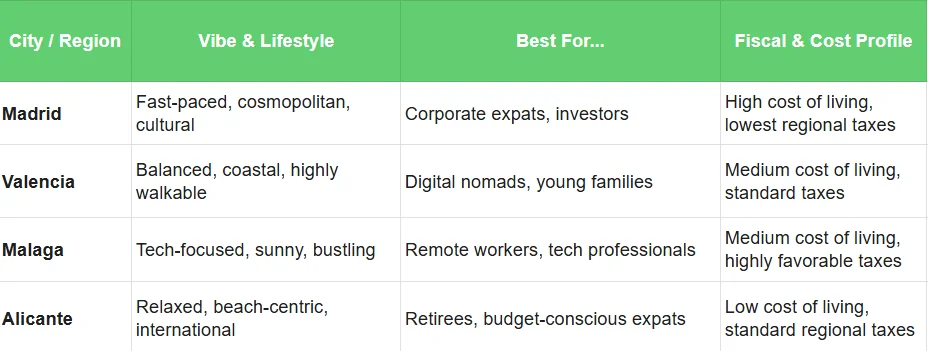
The capital is undoubtedly the economic engine of the country. It is ideal for highly skilled professionals, investors, and anyone looking to establish a corporate presence. The Comunidad de Madrid (Madrid region) is famous for its aggressive tax cuts. It is one of the most favorable regions for high-net-worth individuals due to its virtually non-existent Wealth Tax and excellent bonuses on inheritance. However, Madrid also boasts the highest cost of living and property prices in the country.
Valencia: The digital nomad’s paradise
If you are moving as an Autónomo (a registered freelance or self-employed worker in Spain), Valencia is currently one of the most attractive cities in Europe. It offers a Mediterranean climate, a thriving tech scene, and a cost of living that is significantly lower than Madrid or Barcelona. The city is incredibly bike-friendly and has a massive expat community. While its regional taxes are not as heavily discounted as Madrid’s, the overall affordability makes it a top tier choice for remote workers.
Malaga and Andalusia: The sunny tech hub
Historically known as a retiree destination, Malaga has rebranded itself as the “Silicon Valley of Southern Europe.” With major tech companies opening offices here, it attracts a young, international crowd. Andalusia is also a fiscal haven within Spain, offering excellent tax bonuses and a low cost of living. It provides a perfect balance for those who want a vibrant professional environment without sacrificing the laid-back coastal lifestyle.
Alicante: The retiree and expat haven
Located on the Costa Blanca, Alicante offers some of the most affordable real estate on the Spanish coast. It has a deeply established infrastructure for foreigners, meaning you can easily find English-speaking lawyers, doctors, and accountants. This makes the bureaucratic transition incredibly soft, which is why it remains a top choice for retirees holding a Non-Lucrative Visa.
Comparing your top location options
To help you narrow down your search, use this quick comparative breakdown of the top expat destinations:
The crucial first step: Your local registration
No matter which of the best places to live in Spain you eventually choose, your very first administrative task upon arrival will be exactly the same. You must obtain your Empadronamiento (the municipal certificate of registration).
This document proves to the government that you actually live at a specific address in that city. It is the master key to the Spanish bureaucratic system. You will need your Empadronamiento to apply for your residency card (TIE), register for public healthcare, buy a car, or even enroll your children in a local school. It is essential to ensure that your rental contract allows you to register, as some short-term holidays explicitly prohibit it.
Relocating to a new country is a thrilling journey. By looking past the tourist brochures and considering the fiscal and legal implications of your destination, you can set yourself up for long-term success. Take the time to visit different regions, consult with a tax advisor about how regional laws affect your specific assets, and always rely on official immigration portals like the Ministry of Inclusion, Social Security and Migration for the latest visa updates. Your perfect Spanish lifestyle is out there waiting for you.
Frequently Asked Questions (FAQs)
Do I need a different visa depending on which Spanish city I move to?
No. Immigration is managed by the national government, so your visa (whether it is a Digital Nomad, Golden, or Non-Lucrative Visa) is valid across the entire country. However, the regional immigration offices (Extranjería) process the final paperwork, and waiting times for appointments can vary drastically between major cities and smaller provinces.
Are there different wealth tax rules depending on where I live?
Yes. While the national government sets a baseline, the Autonomous Communities manage the Wealth Tax. Regions like Madrid and Andalusia have applied a 100% bonus, effectively neutralizing it. However, the national government recently introduced a temporary “Solidarity Tax” for ultra-high-net-worth individuals to bypass these regional exemptions.
Is it difficult to find English-speaking professionals in smaller Spanish cities?
In major hubs like Madrid, Barcelona, Valencia, and coastal expat havens like Alicante or Malaga, finding English-speaking lawyers, tax advisors (gestores), and doctors is incredibly easy. However, if you move to deep inland provinces or non-touristic northern regions, you will likely need to speak Spanish or hire a translator to handle your official paperwork.
If you need personalized assistance, at Entre Trámites we offer management and advisory services on immigration matters. You can contact us through this contact form for us to call you, or if you prefer, you can schedule a free consultation or write to us on WhatsApp.