
Are you planning to rent an apartment in Madrid, or perhaps buy an investment property in Barcelona? If so, your first step must be understanding the rules of the game. The Spanish real estate market has undergone a massive transformation, and both expats and locals are adjusting to a stricter, highly regulated landscape.
The introduction of the new housing law in spain—officially known as the Ley por el Derecho a la Vivienda fundamentally shifted the balance of power between property owners and tenants. Whether you are an investor looking for solid rental yields or an expat trying to secure a long-term lease without getting overcharged, you need to know exactly how these regulations affect your wallet. Let’s break down the complex legal jargon into clear, actionable facts.
How the new housing law in Spain Redefines the Market
At its core, this legislation aims to make housing more affordable and prevent explosive rent hikes. To do this, the government introduced the concept of Zonas Tensionadas (Stressed Areas). These are specific neighborhoods or entire regions—like major parts of Catalonia—where housing costs have significantly outpaced local wages. If your property is located in one of these zones, the government strictly dictates how much rent you can charge and how you must handle your contracts.
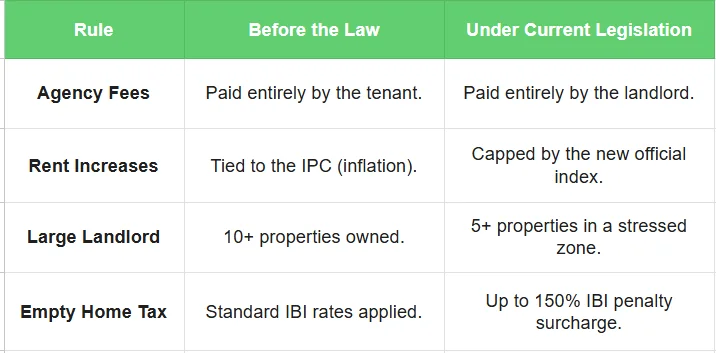
Another massive change under the new housing law in Spain is how the government classifies investors. Previously, you were only considered a corporate powerhouse if you owned a vast portfolio. Now, the definition of Grandes Tenedores (Large Landlords) has been dramatically lowered. If you own five or more residential properties within a designated stressed area, you fall into this category and face much stricter rent caps and eviction rules.
Critical Rules for Landlords and Property Investors
If you are leasing out a property in 2026, you cannot simply raise the rent based on inflation.
The End of CPI Rent Hikes
For decades, landlords used the IPC (Índice de Precios al Consumo – the Spanish Consumer Price Index) to calculate annual rent increases. This is no longer legal for housing contracts. Instead, annual rent updates are governed by a new state index known as the IRAV. This index is specifically designed to keep rent increases strictly below general inflation levels, protecting tenants from sudden economic shocks.
Tax Deductions for Small Owners
It is not all bad news for property owners. To encourage fair pricing, the government offers significant tax breaks on your IRPF (Impuesto sobre la Renta de las Personas Físicas – Personal Income Tax). If you are a small landlord in a stressed area and you voluntarily lower your new tenant’s rent by at least 5% compared to the previous contract, you can get a massive 90% deduction on your net rental income tax.
Penalties for Empty Homes
Leaving a property completely vacant is now heavily penalized. If your house remains empty for more than two years without a justified reason, local town halls can apply a surcharge of up to 150% on your IBI (Impuesto sobre Bienes Inmuebles – the local council property tax).
Major Wins for Renters and Expats
If you are moving to the country, this legislation removes several financial barriers that used to make relocating incredibly expensive.
Agency Fees Are No Longer Your Problem
In the past, tenants were forced to pay the real estate agency’s commission (often equivalent to one month’s rent plus VAT) just to sign a lease. Today, the law strictly dictates that the landlord must pay all agency and contract formalization fees. If an agency tries to charge you this fee as a tenant, they are breaking the law.
Contract Length and Stability
Long-term rental stability is now guaranteed. By default, rental contracts for a vivienda habitual (primary residence) must offer a minimum duration of five years if your landlord is a private individual, or seven years if your landlord is a registered company or legal entity. This prevents owners from kicking tenants out after just one year to find a higher-paying renter.
Here is a quick breakdown of how things changed:
Adapting to the new housing law in Spain requires careful planning, whether you are signing your first lease or managing a robust investment portfolio. By understanding your rights, utilizing official reference indices, and taking advantage of the available tax incentives, you can confidently secure your Spanish home or maximize your rental returns while staying perfectly compliant with the authorities.
Frequently Asked Questions (FAQs)
Can a landlord charge me a fee for drawing up the rental contract?
No. Under current regulations, all costs associated with real estate management and the formalization of the contract must be paid by the property owner, regardless of whether the landlord is an individual or a registered company.
What happens if my landlord tries to raise the rent above the legal index?
If your landlord demands a rent increase that exceeds the official state reference index, the increase is legally void. You are only obligated to pay the legally permitted percentage, and landlords who breach this can face administrative fines.
Does this law affect short-term holiday rentals like Airbnb?
The core rent caps and contract extensions apply strictly to primary residences (vivienda habitual). Short-term tourist rentals and seasonal contracts (like those for students) operate under different local regulations, though the government is actively tightening the monitoring of these temporary leases to prevent fraud.
If you need personalized assistance, at Entre Trámites we offer management and tax advisory services for freelancers and SMEs. You can contact us through this contact form for us to call you, or if you prefer, you can schedule a free consultation or write to us on WhatsApp.