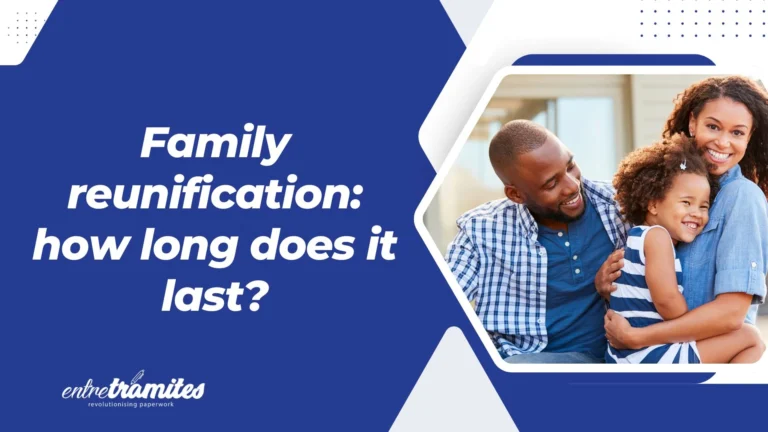
What has changed in family reunification permits?
If you’re applying for family reunification in Spain and the sponsoring family member already has long-term residence or EU long-term residence, there’s an important clarification you should know.
The Spanish Directorate General for Migration Management (Secretaría de Estado de Migraciones) has published Management Criterion 9/2025, which clearly explains how long the first residence permit for reunited family members is valid in these cases.
This clarification is especially useful because, until now, many families were unsure about the exact duration of the initial permit.
Family reunification and long-term residence in Spain
This new criterion is based on Article 68 of Royal Decree 1155/2024, of 19 November, which approves the Regulation of Organic Law 4/2000 on the rights and freedoms of foreigners in Spain and their social integration.
According to the regulation:
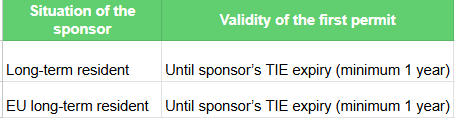
When the sponsoring person holds long-term residence or EU long-term residence in Spain, the validity of the first residence permit for reunited family members will last until the expiry date of the sponsor’s TIE (Foreigner Identity Card) at the time the family member enters Spain, with a minimum validity of one year.
The following residence permit granted to the reunited family member will be long-term residence.
How long does the first family reunification permit last?
The rule is now very clear:
- The first residence permit for the reunited family member is directly linked to the expiry date of the sponsor’s TIE.
- Even if the sponsor’s TIE expires sooner, the permit will never be valid for less than one year.
- This avoids very short permits that previously caused uncertainty and extra renewals.
Quick summary table
What happens after the first permit?
This is one of the most important advantages of family reunification when the sponsor has long-term status.
Once the first residence permit expires:
- The reunited family member will apply directly for long-term residence.
- No temporary renewal is required.
- This provides greater legal stability and fewer administrative steps.
Why this clarification matters
This interpretation:
- Removes legal uncertainty for families.
- Aligns the family member’s status with the sponsor’s long-term residence.
- Reduces the number of renewals and administrative burdens.
- Makes Spain a more predictable option for long-term family settlement.
If you’re planning a family reunification application, this criterion can significantly affect your long-term planning.
Frequently asked questions
Does the first family reunification permit always last one year?
Not exactly. It lasts until the sponsor’s TIE expires, but it will never be shorter than one year, even if the TIE expires earlier.
What if the sponsor renews their TIE shortly after the family member arrives?
The validity is calculated based on the TIE expiry date at the moment of entry into Spain, not on later renewals.
Do reunited family members need to renew a temporary permit?
No. After the first permit, they move directly to long-term residence, provided the legal requirements are met.
Understanding how family reunification permits work in Spain is key to avoiding surprises and planning your future with confidence. This new official criterion brings clarity, stability and long-term security for families reunited under long-term residence.
If you want personalised advice or help with your application, professional guidance can make the process much smoother.
If you need personalized assistance, at Entre Trámites we offer management and advisory services on immigration matters. You can contact us through this contact form for us to call you, or if you prefer, you can schedule a free consultation or write to us onWhatsApp.