In Spain, the annual “Renta” campaign is more than just a formality; it is a vital financial check-up. As we navigate the current 2026 tax season, taxpayers must focus on the previous fiscal year to ensure no costly errors were made. The Spanish Tax Agency (Agencia Tributaria) provides a draft (borrador), but this is merely a starting point based on the information they have received from third parties.
To avoid penalties and ensure you aren’t leaving money on the table, you must manually check the tax data to confirm it reflects your true financial and personal reality. Here is why a thorough review is essential for any international professional or resident in Spain.
The Risk of the “Silent” Error
The most dangerous assumption you can make is that the Tax Agency’s draft is 100% complete. While the government is efficient at collecting data on your salary and bank interest, they often lack information regarding your personal life or specific expenses.
If you confirm a draft that contains errors—even if those errors were made by the Tax Agency—you are the one legally responsible. Failing to check the tax data can lead to:
- Fines: Incorrectly reporting income or claiming a deduction you aren’t eligible for can result in penalties ranging from 50% to 150% of the unpaid amount.
- Loss of Refunds: If the Agency missed a deduction you were entitled to, they won’t point it out for you. You must find it yourself.
Key Areas Where Data Often Fails
When you log in to check the tax data, pay close attention to these frequently overlooked sections:
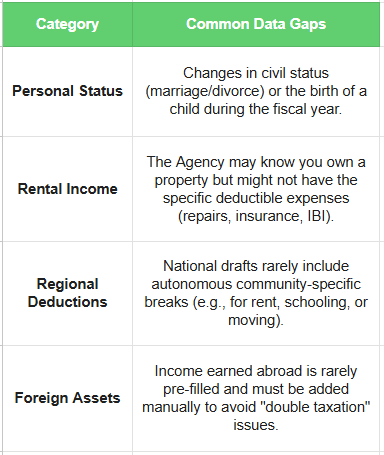
Recent Regulations and Thresholds
The current tax framework includes several modifications that require you to check the tax data with extra care:
- Multiple Payers: The threshold for being required to file is currently set at €15,876 if you had two or more employers (provided the second and subsequent payers exceeded €1,500).
- Self-Employed Obligations: Under the current system, all self-employed individuals (autónomos) are required to file a return, regardless of their income level.
- Maternity Deduction: This remains expanded to include mothers receiving unemployment benefits or those who have contributed to Social Security for at least 30 days after the birth.
Maximizing Your Deductions and Credits
Reviewing your data is the only way to ensure you maximize your tax efficiency. There are significant incentives that you must verify manually:
- Energy Efficiency: Deductions for works that improve the energy rating of your primary residence.
- Electric Vehicles: A 15% deduction on the purchase of new electric vehicles and the installation of charging points.
- Rental Deductions: Many regions offer credits for young tenants or large families that the Tax Agency does not automatically include.
If you don’t manually check the tax data and ensure these are included, the system will not apply them automatically to your draft.
How to Access and Check the Tax Data
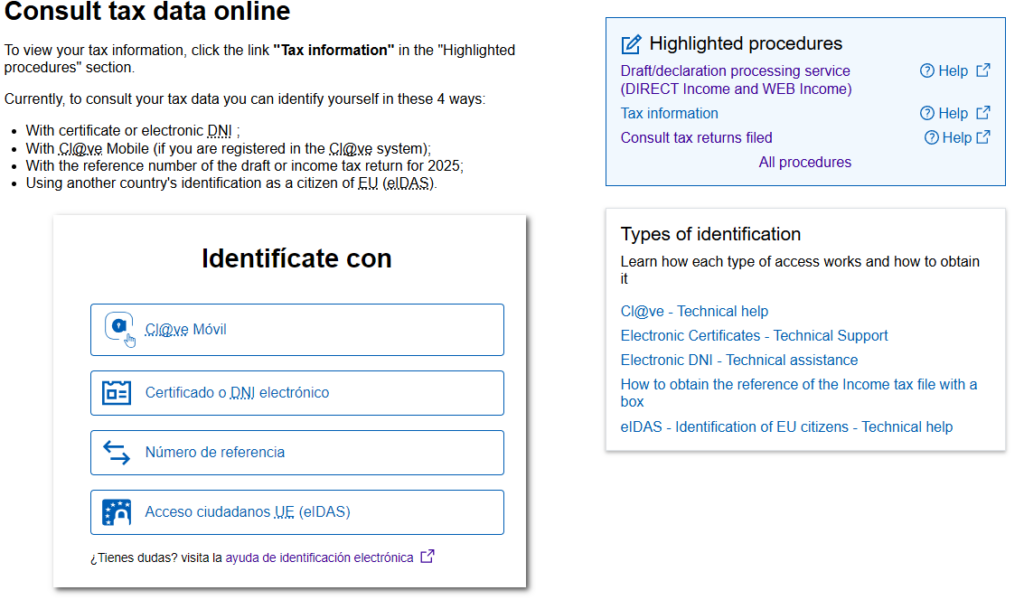
To perform your review, you will need your Digital Certificate, Cl@ve, or the Reference Number from your previous year’s return (specifically the amount in Box 505).
- Log in to the Sede Electrónica of the Agencia Tributaria.
- Select the current “Renta” portal.
- Click on “Consulte sus datos fiscales” (Consult your tax data).
- Compare the summary with your actual invoices, bank certificates, and payroll slips (nóminas).
Frequently Asked Questions
What should I do if the tax data on the website is wrong?
You should not simply ignore it. You must modify the draft in the “Renta WEB” system to reflect the correct information. If the error comes from an employer or bank, it is also wise to ask them to issue a corrected certificate for your records.
Is it worth filing a return if I earned less than the mandatory limit?
Yes, it is often beneficial. Even if you aren’t legally obliged to file, you should still check the tax data. If your withholdings were high or you qualify for regional deductions, the result may be “a devolver” (a refund), and you must file to receive that money.
What happens if I miss the filing deadline?
Filing late results in automatic surcharges. However, if you discover an error after filing, you can use the “Autoliquidación Rectificativa” to fix it. Proactivity is always cheaper than waiting for a notice from the authorities.
Taking thirty minutes to check the tax data can save you hundreds, if not thousands, of euros in potential fines or missed refunds. In a system as complex as the Spanish one, being proactive is your best defense against administrative headaches.
If you need personalized assistance, at Entre Trámites we offer management and tax advisory services for freelancers and SMEs. You can contact us through this contact form for us to call you, or if you prefer, you can schedule a free consultation or write to us on WhatsApp.