
Obtaining and checking your tax returns draft is a fundamental step to ensure your fiscal residency in Spain is managed accurately. As we enter the 2026 tax season, the Spanish Tax Agency (Agencia Tributaria) has consolidated several digital updates and new thresholds that directly impact international residents and freelancers.
In this guide, we explain how to access your draft, what specific figures to verify for the 2025 tax year, and the critical deadlines you must meet in 2026 to avoid penalties.
What is the Draft for Your 2025 Tax Returns?
The draft (borrador) is a pre-filled proposal created by the Tax Agency using your known fiscal data: employment income, bank accounts, real estate holdings, and previous deductions. However, it is rarely 100% complete for expats and professionals. Reviewing your 2025 tax returns is vital because:
- Legal Responsibility: You are legally liable for the final submission, even if the Tax Agency made an error in the initial draft.
- New 2025 Deductions: Several regional tax credits and incentives for energy efficiency have been extended or modified for the 2025 period.
- Mandatory Filing for Autonomous Workers: Since 2023, all autónomos (freelancers) are required to file, regardless of their income level.
How to Access the Draft for the 2025 Tax Year
To view your fiscal data and the draft of your 2025 tax returns, you must access the Renta Web portal. The 2026 campaign prioritizes digital identification:
- Cl@ve Móvil: This is now the preferred method, using a dynamic QR code via the app.
- Electronic Certificate or DNIe: Essential for managing complex filings or high-income brackets.
- Reference Number: You can obtain this using your NIE and the specific value from Box 505 of your previous return.
Essential Checklist for Reviewing Your 2025 Return
When you sit down to finalize your 2025 tax returns during the 2026 window, verify these three critical areas:
The Multiple Payer Threshold
For the 2025 tax year, if you received income from more than one payer (e.g., you changed jobs during the year), the filing threshold remains at €15,876. If you earned more than this and the second payer paid you more than €1,500, filing is mandatory.
Cryptocurrency and Foreign Assets
If you held crypto-assets or accounts abroad during 2025, ensure they are reflected. The Tax Agency has increased its cross-referencing with international platforms, making the review of these sections mandatory to avoid high fines.
Maternity and Family Deductions
The expanded maternity deduction applies to the 2025 period. Mothers who receive unemployment benefits or work at least 30 days after birth can claim up to €1,200 annually. Ensure this is manually checked, as it doesn’t always populate correctly in the draft.
Key Deadlines for the 2026 Tax Campaign (Renta 2025)
The Spanish Tax Agency has confirmed the following schedule for the 2026 filing season:
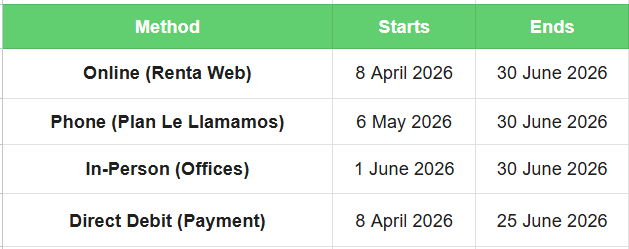
Practical Example: The Remote Worker Scenario
Consider Mark, a software engineer who moved to Spain in mid-2025. When he accesses his draft in April 2026, the Tax Agency only shows his local bank interest but misses his foreign income. By reviewing his 2025 tax returns, Mark identifies that he qualifies for the “Beckham Law” or specific deductions for rental housing that were not automatically included. By correcting the draft, he avoids a future audit and secures a significant refund.
Navigating Spanish tax returns involves more than just clicking “accept” on a pre-filled form. Proactive review ensures you remain compliant with the latest changes in the Ley del IRPF while maximizing your legal savings.
Frequently Asked Questions
When can I access the draft for my 2025 tax returns?
The draft for the 2025 tax year will be available on the Tax Agency’s website starting 1 April 2026.
Is it mandatory for all freelancers to file 2025 tax returns?
Yes. Regardless of your income level, if you were registered as an autónomo at any point during 2025, you are legally required to file a return in 2026.
What is the deadline for payments in the 2026 campaign?
If your return results in a payment and you want to use direct debit, you must submit it by 26 June 2026. The final deadline for all other cases is 30 June 2026.
Reviewing your draft carefully prevents costly errors and ensures you receive your refund as quickly as possible. Don’t leave your fiscal health to an automated algorithm; ensuring your 2025 filing is perfect is the best way to start your 2026 financial year.
If you need personalized assistance, at Entre Trámites, we offer management and tax advisory services for freelancers and SMEs. You can contact us through this contact form for us to call you, or if you prefer, you can schedule a free consultation or write to us on WhatsApp.