As an expat or resident in Spain, seeing the word “negative” on an official document might cause a moment of panic. However, in the context of the Spanish Tax Agency (Agencia Tributaria), a negative income statement is usually the result you want.
This status essentially means that you have paid more tax throughout the year than you were legally required to. For the 2025 tax campaign (filed in 2026), this is a common scenario for professionals with high withholdings or those eligible for specific deductions. In this guide, we will break down exactly what this means for your wallet and how to ensure the refund process goes smoothly.
What exactly is a negative income statement?
A negative income statement occurs when the calculation of your annual Income Tax (IRPF) results in a figure below zero. This happens when the total amount of tax already withheld from your salary or invoices, plus any applicable tax credits, exceeds your final tax liability.
In simpler terms: The government owes you money.
Imagine your employer withheld €5,000 from your paycheck over the course of 2025. After filing your return and applying deductions for rent, children, or pension plans, your actual tax duty for the year was only €4,200. The resulting negative income statement would show -€800, which the Tax Agency must refund to you.
Key implications of a negative result
When your tax return ends with a minus sign, there are three things you need to know immediately:
- No further payments: You do not have to pay a single cent more to the Treasury for that fiscal year.
- Right to a refund: You are legally entitled to receive the overpaid amount back into your bank account.
- Potential for review: While a refund is great, the Tax Agency may pause the payment to verify your data. This is common if you are claiming large deductions for the first time, such as those related to the Beckham Law or specific regional incentives.
Deadlines and the refund process in 2026
For the current tax year, the calendar is strict. Missing a deadline can turn a “to-be-refunded” status into a “to-be-fined” status.
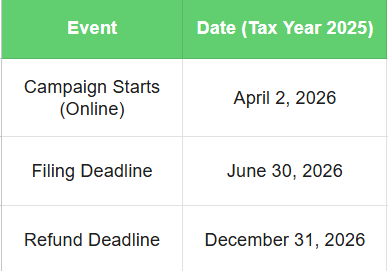
Legally, the Agencia Tributaria has six months from the end of the campaign (June 30) to issue your refund. If they delay the payment beyond December 31, 2026, they are required to pay you “late payment interest” (intereses de demora) automatically. However, most users with a straightforward negative income statement receive their funds within 30 to 60 days.
How to handle a negative income statement properly
To ensure your money arrives without a hitch, you should follow these practical steps:
Verify your IBAN
The most common reason for delayed refunds is an incorrect or closed bank account number. Ensure the IBAN provided in your draft is current and that you are listed as an account holder.
Check for regional deductions
In Spain, where you live matters. Regions like Madrid, Andalusia, or Valencia have specific deductions for young renters, daycare expenses, or even investments in sustainable energy. If you don’t claim these, your negative income statement might be smaller than it should be.
The “Obligation to File” trap
You might think that if you don’t earn much, you don’t need to file. However, if your result is negative, you must file to get your money back. If you don’t submit the return, the government keeps your overpaid withholdings. Even if you are below the €22,000 threshold (for one payer), check your draft—you might be leaving money on the table.
Common reasons for a negative result
- Job changes: If you had two or more employers in 2025, your withholdings might be mismatched.
- Deductions: New parents (Maternity/Paternity Leave), homeowners with old mortgages, or those paying into pension funds.
- Incomplete year: If you only worked for 6 months but were taxed at a rate based on an annual salary.
Frequently Asked Questions (FAQs)
Does a negative income statement mean I did something wrong?
Not at all. It simply means you overpaid your taxes throughout the year via withholdings. It is a very common result for employees and freelancers who manage their expenses well.
How can I track the status of my refund?
You can use your Digital Certificate or Permanent Cl@ve on the “Sede Electrónica” of the Tax Agency. Look for “Mis Expedientes” to see if your return is being recorded, processed, or if the payment has been issued.
What happens if Hacienda doesn’t pay me by the end of the year?
If you haven’t received your refund by December 31, the Tax Agency must pay you the amount plus interest. You do not need to claim this interest; it is added to the payment automatically.
Don’t let the technical terms of the Spanish administration confuse you. A negative income statement is your opportunity to recover your hard-earned money. By reviewing your data carefully and submitting on time, you can ensure that your tax season ends with a boost to your bank balance rather than a bill.
If you need personalized assistance, at Entre Trámites we offer management and tax advisory services for freelancers and SMEs. You can contact us through this contact form for us to call you, or if you prefer, you can schedule a free consultation or write to us on WhatsApp.